The Revd Clive Hicks, the diocesan Healthy Churches Development Enabler, writes about rewilding and healthy churches. At the recent AGM of the Warwickshire Wildlife Trust (WWT) in June, there were…
The Revd Clive Hicks, the diocesan Healthy Churches Development Enabler, writes about rewilding and healthy churches.
At the recent AGM of the Warwickshire Wildlife Trust (WWT) in June, there were several noteworthy statements which struck me. For six months they had asked people, in multiple ‘Green Conversations’, what they loved about nature. People said health, peace, birds and birdsong, most frequently. People also expressed concern about the decline in biodiversity, human irresponsibility, lack of education, policy and governance, need for collaboration and community engagement.
‘Team Wilder’ is the title of a new strand of their work which brings coherence to their community voicing of local issues, calling for change. WWT is a ‘collective of people taking action’
80,000 people gathered in London on 22 June to bring passion to the ‘Restore Nature Now’ campaign shared with many respected charities including the RSPB and Wildlife Trusts
They work with the ‘Duplicator Effect’ by helping four people to talk to another four people across communities including influential landowners
The Trust is in conversation with over 100 farmers in clusters, to look at local wildlife related themes and issues
The Trust shows a real interest in community as well as national concerns. They are working hard to get their own passions across to diverse audiences. They not only listen carefully, but also champion voices in the community, and this was demonstrated when they introduced a panel of local activists from Attleborough, Harbury and Sydenham – each of them were ‘community evangelists’ in their own way. Hugely knowledgeable, passionate, persevering, learning by using questionnaires in shopping centres, aligning with interests like litter picking, taking action in specific ways, understanding wildlife, influencing developers, communicating through parish magazines every month, staying in touch with their networks on WhatsApp, looking for organisations doing similar things, go to public places where people gather, put points across in free magazines.
As ever there is much to appreciate, much to learn from with each of these as individuals and groups. Just look at ‘Harbury Swift Friendly Village’ ….
They noticed that the swift population had reduced by 50% over a number of years. People had actively prevented swifts nesting on their properties. Now there are 60 nest boxes across the village, and the idea has spread to another community (Lighthorne). They had to educate the village to correct negative responses.
Swifts are colonial nesters so they look to locate multiple boxes in the same residential area
They are rebuilding a colony (or community) rather than doing it as a hobby
They discovered that some sites are unsuitable for swifts
They know that by playing swift bird calls they are more likely to attract new birds to the village
They tap in to the RSPB Swift Awareness Week (29 June to 7 July, 2024) to increase awareness
First, of course, we can show our affiliation in creation care by joining, wholeheartedly, with such initiatives in our community. A church could host a seed swap event, or host a display on the charity, or even be a voice for change and education on environmental themes; but also simply join in with what is already planned. We can celebrate the successful outcomes when they come; your parish newsletter can celebrate the discovery of rare species in the countryside near your church.
The Harbury project once again speaks about the need for our church communities to be radical in their hospitality, understanding how people could need to feel part of a group, as well as being approached as individuals, engaging with a community with shared interests, speaking out to communicate truths and opportunities. How do we communicate with understanding to different groups in our community – use their language, interpret and respect their values?
One of my offerings as the Diocesan Healthy Churches Development Enabler is to pick up themes on local wildlife engagement as a route to exploring Vision as church. The signs are that it could be a good way to work with all ages in a local church context. This could take the form of an Away Day, a talk or sermon, or even to develop a more relevant engagement within your local community.
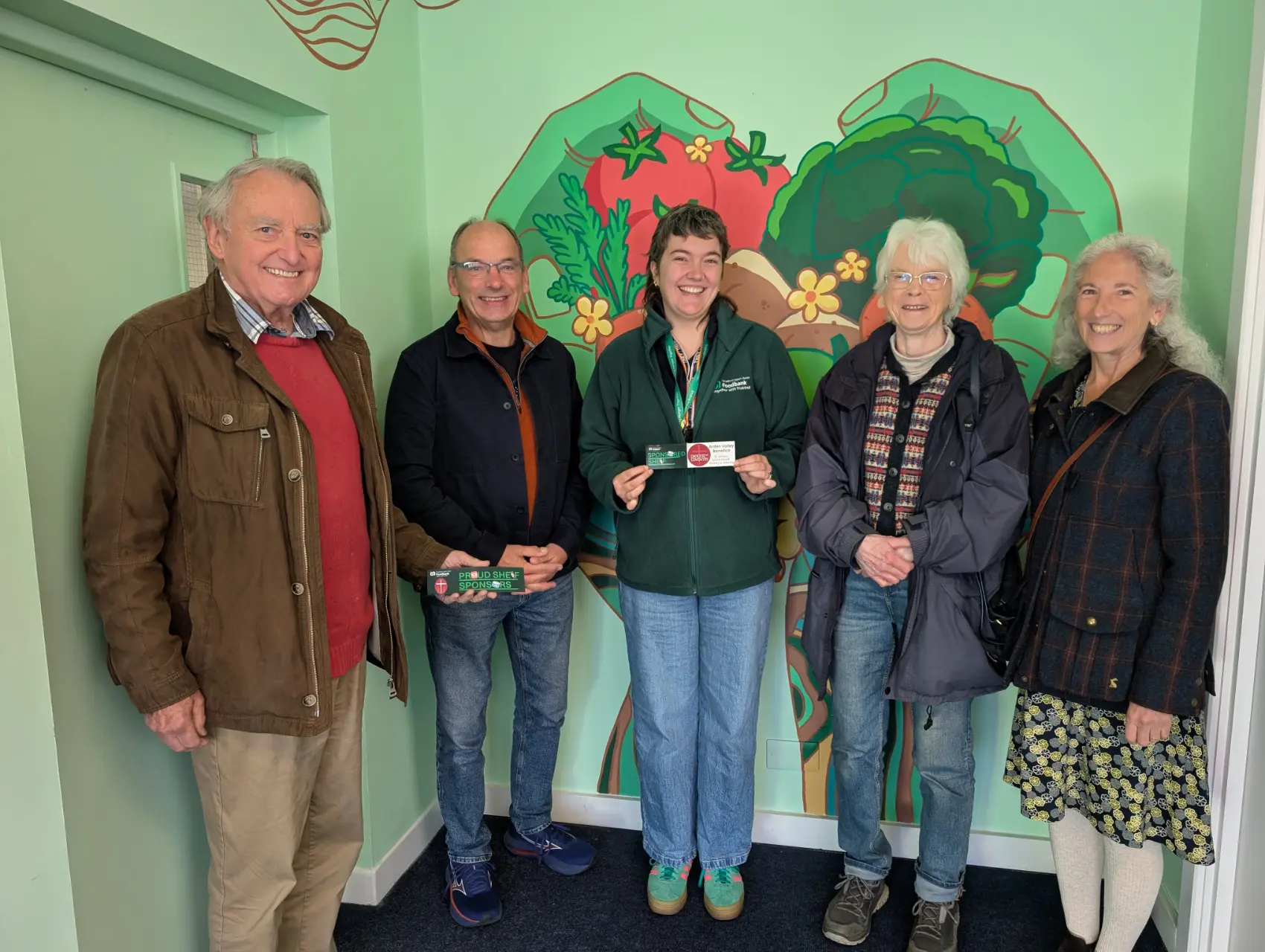
The Sponsor a Shelf scheme by Stratford-upon-Avon Foodbank invites local businesses, offices, cafes, and shops to support emergency food supplies for £50 a month. The PCCs of Snitterfield and Bearley agreed to support this initiative and are now proud shelf sponsors.
Following the electronic count on 14 October, six people have been elected to stand for General Synod from across the diocese. Three people have been elected to stand in the House of Laity and a further three people will stand in the House of Clergy.
The Bishop of Coventry, the Right Reverend Sophie Jelley, recently led a special Choral Evensong service to celebrate the rededication of the Becket Chapel at Holy Trinity Church in Stratford-upon-Avon.
Join Coventry Cathedral for an extraordinary 24 hours of music as performers from across the city and beyond come together…
Manage Consent
To provide the best experiences, we use technologies like cookies to store and/or access device information. Consenting to these technologies will allow us to process data such as browsing behavior or unique IDs on this site. Not consenting or withdrawing consent, may adversely affect certain features and functions.
Functional
Always active
The technical storage or access is strictly necessary for the legitimate purpose of enabling the use of a specific service explicitly requested by the subscriber or user, or for the sole purpose of carrying out the transmission of a communication over an electronic communications network.
Preferences
The technical storage or access is necessary for the legitimate purpose of storing preferences that are not requested by the subscriber or user.
Statistics
The technical storage or access that is used exclusively for statistical purposes.The technical storage or access that is used exclusively for anonymous statistical purposes. Without a subpoena, voluntary compliance on the part of your Internet Service Provider, or additional records from a third party, information stored or retrieved for this purpose alone cannot usually be used to identify you.
Marketing
The technical storage or access is required to create user profiles to send advertising, or to track the user on a website or across several websites for similar marketing purposes.